Transforming Lives Through Health
Knee Injury Types & Causes
Common Knee Injuries in Sports
January 30, 2025
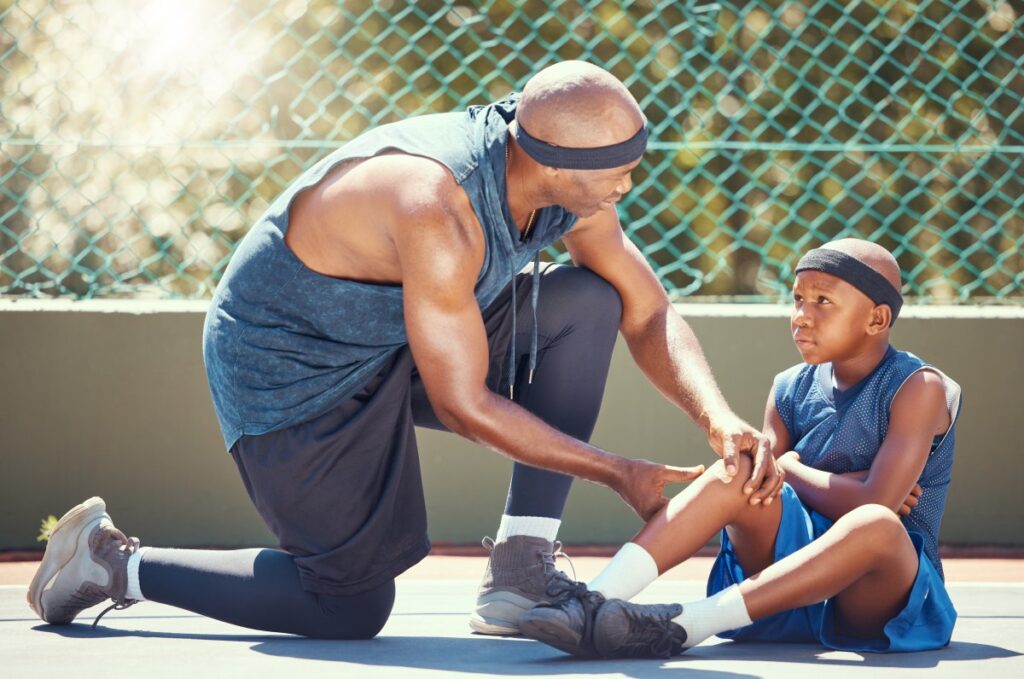
The knee is one of the hardest-working joints in the human body. It allows us to run, jump, pivot, and perform countless daily activities. This joint plays an especially critical role in enhancing movement and agility for athletes. However, given its unique structure and frequent use, the knee is vulnerable to various injuries that can disrupt physical performance and overall quality of life. In fact, knee injuries account for 41% of all sports injuries.
If you’re an athlete or sports enthusiast, understanding the most common knee injuries and their treatments can help you prevent long-term damage and make more informed decisions about your orthopedic health.
What Are the Most Common Knee Injuries in Sports?
The most common sports-related knee injuries are sprains and tears of connective tissues (particularly the ACL and the meniscus). However, many sports knee injuries can involve more than one part of the joint. The first signs of many issues with the knee joint are pain and swelling.
While getting back in the game quickly is a priority for many athletes, it’s vital to determine what kind of injury is causing symptoms so you can get the best treatment and avoid long-term issues with your knees.
1. Torn Meniscus
A meniscus tear is one of the most common sports-related knee injuries. The meniscus is the cartilage that provides a cushion between the two bones that meet in a joint. In the knee, two menisci cushion the tibia (shinbone) and femur (thigh bone).
A torn meniscus occurs when the knee is twisted or over-rotated, which is why athletes who play sports that involve pivoting, like basketball, tennis, and football, are often at risk.
Symptoms of a Torn Meniscus
- Pain around the knee
- Clicking or popping sound
- A feeling of fullness in the knee
- Stiffness and limited range of motion
- The feeling of your knee giving out and/or locking into place
Treatment Options
- Rest and the RICE method (rest, ice, compress, elevate)
- Physical therapy to improve strength and mobility
- Arthroscopic surgery in severe cases to repair or remove damaged cartilage
2. Knee Ligament Injuries
What people commonly call a “knee sprain” is usually an injury to ligaments in the knee. Ligaments are fibrous bands of connective tissue made up of collagen fibers that connect bone to bone.
A knee ligament injury involves damage to the connective tissues that stabilize the knee joint, such as the ACL or collateral ligament. This can happen during high-impact activities or due to a knee dislocation. Symptoms typically include pain, swelling, and difficulty moving the knee.
There are four main ligaments that stabilize the knee joint and allow it to move naturally: the anterior cruciate ligament (ACL), the posterior cruciate ligament (PCL), the lateral collateral ligament (LCL), and the medial collateral ligament (MCL).
Anterior Cruciate Ligament (ACL)
The ACL connects the femur to the tibia and controls the rotation and forward movement of the shin. ACL injuries occur when this ligament is sprained or torn. This is the most common sports-related knee injury because the ligament tears when a person changes direction rapidly, slows down or stops suddenly, or lands from a jump incorrectly.
The ACL can also be injured from direct contact or a collision. Football, basketball, and volleyball players, as well as other athletes who perform many sudden starts and stops, are most susceptible to ACL injuries.
Posterior Cruciate Ligament (PCL)
The PCL is located at the center of the knee and prevents the tibia, or shinbone, from moving backward. It’s the strongest ligament in the knee and isn’t injured as often as the ACL. However, it can be torn in direct-contact sports such as football.
Lateral Collateral Ligament (LCL)
The LCL is located on the outer side of the knee and prevents the knee from bending inward. It is the knee ligament least likely to suffer from a sports-related injury, but as with any area of the knee, direct trauma can cause injury.
Medial Collateral Ligament (MCL)
The medial collateral ligament, or MCL, is located on the inner side of the knee and prevents the knee from bending outward. Like the PCL, this ligament is not injured as often as the ACL but can be injured in contact sports. Direct hits to the outside of the knee usually cause MCL injuries.
Symptoms of Knee-Ligament Injuries
- A loud pop or snap at the time of injury
- Difficulty walking
- Swelling
- Tenderness and black/blue coloration along the joint
- Loss of range of motion
- A feeling of instability
- Inability to bear weight
Treatment Options
- Bracing and stabilization for mild sprains
- Targeted exercises through a physical therapist
- Reconstruction surgery for severe collateral ligament injuries and tears
Doctors use a combination of physical exams and imaging tests like MRIs or X-rays to diagnose ligament injuries. Sometimes arthroscopy is used to get a closer look at the joint.
3. Patellar Tendonitis (Jumper’s Knee)
Patellar tendonitis occurs when the connective tissue between the bottom of the patella (kneecap) and the tibia becomes inflamed or injured. This condition is also known as “Jumper’s Knee” because it is an overuse injury that often occurs when athletes jump repeatedly. Basketball and volleyball players, both recreational and professional, are especially susceptible to patellar tendonitis.
Symptoms of Patellar Tendonitis
- Pain in the front of the knee, especially when kneeling or applying pressure to the knee
- Tenderness around the lower part of the kneecap
- Swelling
- Pain and stiffness when jumping, running, walking, and/or straightening and bending the leg
Treatment Options
- Rest, NSAIDs for pain management, and cold therapy
- Therapy exercises to strengthen the quadriceps and hamstring muscles
- Supportive taping or braces to stabilize the knee
4. Patellofemoral Pain Syndrome
Patellofemoral pain syndrome is a broader term for issues with the soft tissues surrounding the kneecap that cause pain. This syndrome is also known as “Runner’s Knee” because it is common in athletes who run and perform other activities requiring repetitive knee joint flexion.
Symptoms of Patellofemoral Pain Syndrome
- Dull, aching pain in the front of the knee
- Pain that worsens with walking, running, squatting, prolonged sitting, or squatting
Treatment Options
- Corrective exercises to enhance alignment and flexibility
- Custom orthotics to reduce stress on the knee
- Proper warm-ups and stretching routines
5. Knee Bursitis
Knee bursitis is inflammation of the bursa, a small, fluid-filled sac that protects the knee joint. Three major bursae surround the knee joint, all protecting the knee and reducing friction between tissues in the body.
Knee bursitis most commonly affects the prepatellar bursa, located over the kneecap. It can occur in athletes if the bursa fills with blood due to injury or overuse.
Symptoms of Knee Bursitis
- Mild to moderate pain in the knee
- Warmth or redness in the affected area
- Stiffness when walking (severe cases)
- Fever and illness can occur in case of septic bursitis – seek immediate care if you have this symptom
- Swelling / the appearance of a lump on the knee
Treatment Options
- Anti-inflammatory medicines such as NSAIDs
- Aspiration to remove excess fluid in severe cases
- Physical therapy to improve range of motion and relieve stiffness
6. Iliotibial Band Syndrome
The iliotibial (IT) band is a dense band of fascia that originates in the iliac crest (upper part of hip bone), runs along the outer part of the thigh, and attaches at the top of the tibia (shinbone). This tough band of connective tissue and its associated muscles are responsible for extending, abducting, and laterally rotating the hip.
IT band syndrome is an overuse injury often suffered by athletes like runners and cyclists whose activities require repeated extension and flexion of the knee.
Symptoms of Iliotibial Band Syndrome
- Lingering pain after exercising, especially in the outer part of the knee
- Clicking or rubbing sensation on the side of the knee
- Pain that spreads up the thigh and into the hip
Treatment Options
- Foam rolling and IT band stretches
- Cross-training to reduce stress on the IT band
- Proper cycling or running techniques to prevent recurrence
Schedule an Appointment for Your Knee Injury at Alexander Orthopaedics
If you’re suffering from a sports knee injury, getting the correct diagnosis is imperative before deciding on the best treatment to get you back in the game. Schedule an appointment with the experts at Alexander Orthopaedics today.
FAQs about Common Knee Injuries in Sports
When Should You Visit a Doctor for a Knee Injury?
It’s best to see a doctor as soon as possible for any of the following:
- If you’re experiencing sharp knee pain
- If you can’t bear any weight on the knee
- If your knee joint is visibly bent or deformed
- If you heard a popping sound at the time of the injury
For milder symptoms, you can try the RICE (rest, ice, compress, elevate) method for a day or two before re-evaluating. If your knee problems remain the same or worsen, visit your doctor.
What Should I Avoid If I Have an Injured Knee?
While it depends on the injury, it’s generally best to avoid high-impact exercises such as running and jumping when you have an injured knee. Activities that create deep knee flexions, such as lunges and squats, should also be avoided.
How Can I Prevent Knee Injuries in Sports?
While it might be impossible to always prevent knee injuries in sports, there are steps you can take to decrease your chance of injury.
- Always warm up and cool down before and after exercise.
- Strengthen and stretch the muscles that support the knee joint.
- Wear properly fitting shoes.
- Build up workout intensity slowly.
- Cross-train to prevent overuse injuries.
- Stay hydrated.
- Opt for a rest day or low-impact activities if you’re experiencing any early or mild knee injury symptoms.
- Don’t “play through the pain”— take it seriously when you experience pain in your knee joint.
How Can I Prevent Common Knee Injuries During Exercise?
Preventing knee injuries involves strengthening the muscles around the knee, such as the ones in the lower leg and the front of the thigh. Proper warm-ups, stretching, and avoiding overexertion are essential. Using appropriate footwear and ensuring correct form during exercises can also help reduce the risk of common injuries.
What Are the Best Exercises for Rehabilitation After a Knee Injury?
After a knee injury, it’s essential to strengthen and stretch the muscles that support the knee joint, which include the hip abductors and the hamstrings. The quadriceps (front-thigh muscles) are much stronger in many athletes than the hamstrings.
This type of muscle imbalance can lead to injury, so focus your strengthening routine on weaker muscle groups while focusing your stretching on stronger muscle groups.
In general, activities that can benefit your rehabilitation after knee injury include:
- Foam rolling
- Stretching and strengthening exercises, especially for the hamstrings and hip abductors (hamstring curls, clamshells, and lateral leg lifts)
- Low-impact exercises such as walking, swimming, pilates, and yoga
Can a Knee Injury Heal on Its Own?
Minor injuries, such as mild sprains or strains, may heal with rest, ice, and time. However, more severe injuries, like cruciate ligament injuries or meniscal tears, typically require medical treatment, including knee surgery or other interventions in sports medicine to ensure proper healing.
What Causes Knee Pain While Sitting?
Knee pain while sitting, often referred to as “moviegoer’s knee,” can be caused by osteoarthritis, inflammation under the kneecap, or issues with the tendons or ligaments around the joint. Poor posture or prolonged periods of sitting may also contribute to discomfort.
Posted in Sports Medicine and tagged knee, sports injury, sports medicine